
 Español
 Pусский
 Français
 العربية


pulp impurity screener
A pulp impurity screener is an important piece of equipment used in the pulp and paper industry to remove unwanted contaminants from fiber slurry before the next processing stage. Its main function is to separate impurities such as plastic fragments, metal pieces, sand, stones, adhesive residues, and other heavy or oversized materials from the pulp stream. By doing so, it helps improve pulp quality, protect downstream equipment, and ensure more stable production.The screener usually works by allowing qualified pulp fibers to pass through screening elements while rejecting impurities that cannot pass through the openings. Depending on the design, it may use pressure screening, vibration, centrifugal force, or a combination of these principles. The screening baskets or plates are often designed with precision slots or holes to maximize fiber recovery while maintaining high impurity removal efficiency. This balance is very important because excessive fiber loss can reduce yield and increase operating costs.In a modern pulp processing line, impurity screening is often placed after initial pulping and coarse cleaning. At this stage, the pulp may still contain a variety of contaminants from raw materials, recycled paper, or manufacturing processes. If these impurities are not removed early, they can cause serious problems later, including equipment wear, paper defects, broken sheets, nozzle clogging, and reduced product strength. Therefore, a pulp impurity screener plays a key role in improving both product consistency and machine reliability.One major advantage of this equipment is its ability to handle large volumes of pulp continuously. It is designed for industrial operation, with high capacity and stable performance. Many screening systems are also equipped with automatic controls that monitor pressure, flow rate, and reject discharge. This helps operators maintain optimal conditions and reduces manual intervention. Some models offer self-cleaning functions to prevent clogging and improve uptime.Material selection is also important for pulp impurity screeners. Because the equipment operates in wet, abrasive, and sometimes corrosive environments, durable materials such as stainless steel are commonly used. Wear-resistant components can extend service life and reduce maintenance frequency. Easy access for inspection and replacement of screen baskets or rotor parts is another practical feature that supports efficient operation.The quality of screened pulp has a direct effect on paper and board production. Cleaner pulp improves surface appearance, reduces defects, and enhances the final product’s strength and uniformity. It also contributes to lower downtime and better overall process efficiency. For this reason, the impurity screener is considered a critical component in modern pulp preparation systems.In summary, a pulp impurity screener is essential for removing contaminants, protecting equipment, and improving pulp quality. Its reliable performance supports efficient production, better fiber recovery, and higher final product quality across a wide range of pulp and paper applications.
Products
Category:
-
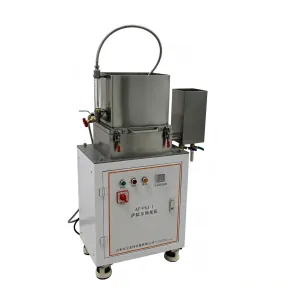
Somerville Standard Screen
Category: Pulp Preparation & Sheet Forming EquipmentBrowse number: 334Number:Release time: 2026-06-03 16:08:55The Somerville Standard Screen is a laboratory pulp screening device manufactured per TAPPI T275. It uses vertical oscillation of a slotted screen plate to separate and quantify impurities such as stickies, plastics, sand, and metal particles from pulp. The standard screen slot is 0.3 mm with 756 slots, an amplitude of 3.2±0.1 mm, and an operating speed of 690-700 rpm. It is essential for standardized pulp cleanliness evaluation in paper laboratories.
News
Category:
No search results found!
Case
Category:
No search results found!
Video
Category:
No search results found!
Download
Category:
No search results found!
Job
Category:
No search results found!
Featured Products
-
NEWS
Somerville Standard Screen
Learn more



 Phone
Phone