
 Español
 Pусский
 Français
 العربية


laboratory beater
A laboratory beater is a specialized piece of equipment used in testing and research environments to process pulp, fibers, or other fibrous materials under controlled conditions. It is designed to simulate the mechanical action that materials undergo during refining or beating, allowing researchers and technicians to evaluate how different treatment levels affect structure, strength, drainage, and other performance characteristics. Because of its precision and repeatability, this type of equipment is widely used in laboratories related to paper, pulp, textiles, and materials science.The main purpose of a laboratory beater is to provide consistent mechanical treatment to a sample so that its properties can be measured accurately before and after processing. By adjusting the beating intensity, duration, and speed, users can study how fibers change in length, flexibility, fibrillation, and bonding potential. These changes are important in determining the final quality of products such as paper sheets, specialty fibers, and composite materials. The ability to control each operating parameter makes the laboratory beater an essential tool for quality control and product development.In most designs, the machine consists of a sturdy frame, a sample container or vat, a rotating beating element, and a control system. The beating element may include blades, bars, or roll-like components that interact with the sample and generate the desired mechanical effect. The sample is typically mixed with water to create a suspension, which ensures uniform treatment. During operation, the machine applies repeated pressure, friction, and shear forces, causing the fibers to become more flexible and better suited for bonding in later manufacturing stages.One of the key advantages of a laboratory beater is its ability to reproduce results with a high degree of accuracy. This is especially valuable when comparing different raw materials, additives, or treatment methods. Researchers can prepare multiple samples under identical conditions and observe differences in refining behavior, drainage rate, tensile strength, burst strength, or surface quality. The data collected from these tests helps in optimizing production processes and improving material performance while reducing waste and experimentation costs.Laboratory beaters are generally built with durability and ease of operation in mind. They often include safety features such as protective covers, emergency stop functions, and overload protection. Some models also offer digital displays or automated controls that allow users to set and monitor operating time, speed, and beating intensity more precisely. Easy cleaning and maintenance are also important, since residue from previous tests can affect the outcome of future experiments.Another important feature of a laboratory beater is its role in research and development. Engineers and scientists use it to explore the relationship between fiber treatment and final product properties. For example, in paper development, the beating process can influence sheet formation, porosity, smoothness, and printability. In other fiber-based applications, it can help determine how raw materials will behave during mixing, pressing, or bonding. This makes the machine useful not only for routine testing but also for innovation and formulation improvement.Overall, a laboratory beater is a valuable instrument for controlled fiber processing and material evaluation. Its precision, reliability, and versatility make it an important part of many testing laboratories. By enabling users to study the effects of mechanical treatment in a repeatable way, it supports better product design, higher quality standards, and more efficient industrial development.
Products
-
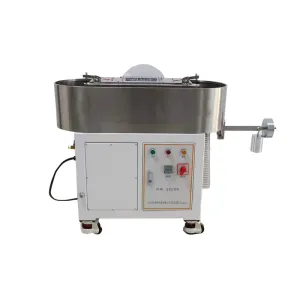
Valley Beater
Category: Pulp Preparation & Sheet Forming EquipmentBrowse number: 377Number:Release time: 2026-06-03 16:13:45The Valley Beater (23 L Hollander beater) is an international standard laboratory beating device meeting ISO 5264/1, TAPPI T200, and GB/T 24325-2009. It uses the mechanical action between the rotating flybar roll and stationary bedplate to cut, compress, crush, and fibrillate fibers. Standard capacity is 23 liters with a dry pulp loading of 200-700 g, operating at 500±10 rpm. All key wet-end components—trough, flybar roll, and bedplate—are stainless steel. It features automatic cleaning and programmable timer control, and is widely applicable for beating trials on various fiber types.
News
Category:
No search results found!
Case
Category:
No search results found!
Video
Category:
No search results found!
Download
Category:
No search results found!
Job
Category:
No search results found!
Featured Products
-
NEWS
Valley Beater
Learn more



 Phone
Phone